Skip to content

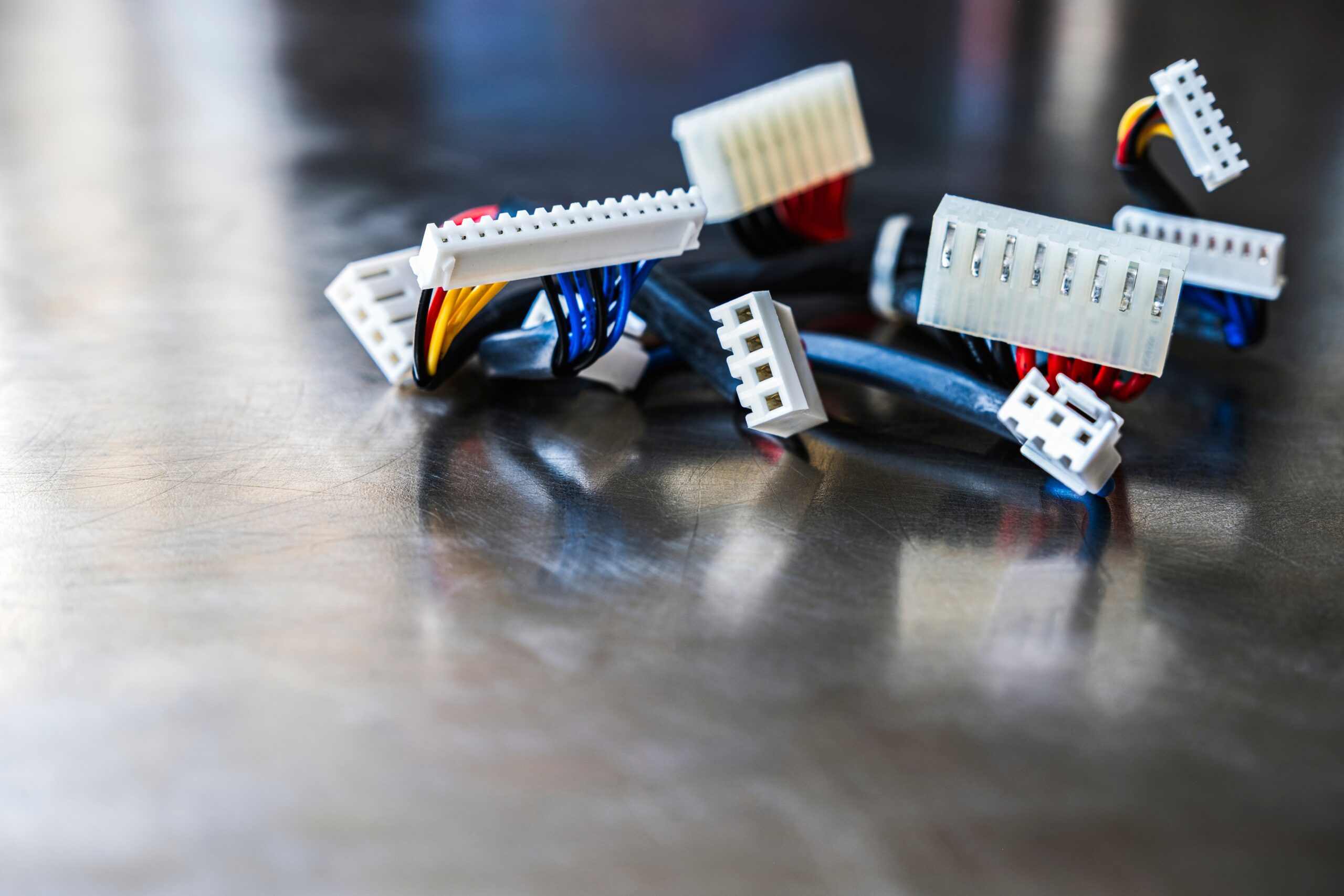
If you are at the early validation stage, there are several advantages of prototype cable assemblies. But a successful prototype does not automatically mean a cable assembly is ready for repeatable production.
Cable assemblies that work in a small prototype run may still need clearer documentation, controlled sourcing and defined inspection methods before they can be manufactured consistently. Once the design has been proven, the next step is to make sure it can be reproduced reliably as part of the wider product realisation journey.
This is where an experienced electronics manufacturer can add value.
The move into production involves more than placing larger orders: it requires a structured approach to engineering information, supply planning, quality controls and electronics manufacturing.
Moving from prototype to production
Moving into production should be treated as a decision point that turns a proven prototype into a controlled process that can deliver consistent results over time.
This means reviewing the design, the materials, the build method and the quality requirements before production activity begins. Addressing these areas early gives you a clearer basis for planning and helps prevent avoidable uncertainty later.
Design freeze and the product realisation process
A design freeze is the point at which the approved configuration is formally controlled for production. It does not mean the design can never change. Instead, it means that any change should be reviewed, approved and recorded before it is introduced.
The product realisation process should include clear revision control for the information needed to build and inspect the product. This may include drawings, bills of materials, wire schedules, work instructions and test specifications.
A custom cable assembly should also have defined requirements for component approval and traceability. Depending on the product and its application, this might include recording material batches, manufacturing lots or serial numbers.
Before production begins, you should agree:
IPC/WHMA-A-620 describes requirements and acceptance criteria for cable, wire and harness assemblies, including process control, inspection and documented acceptance requirements. It also states that the applicable product class should be agreed and documented.
Design for manufacture in electronics manufacturing
A design that can be hand-built by a skilled technician may not be ready for repeated production without further development. The objective of design for manufacture is not simply to increase output; it is to create a process that can be followed consistently.
For cable and harness assembly, this may involve reviewing how conductors are cut, stripped, terminated, routed, labelled and tested. The appropriate approach depends on the design, expected demand, product lifecycle and level of flexibility required.
Possible process controls include:
An electronics manufacturer can use prototype feedback to identify areas where the build process may need refinement. This can include revising wire lengths, improving access to connectors or changing the sequence in which parts are assembled.
The purpose is repeatability. In electronics manufacturing, a process should not depend solely on one person’s experience or interpretation of the design.
Supply chain planning for custom cable assemblies
Sourcing a few prototype parts is different from supporting ongoing production. A component may be available in small quantities, but its long-term availability, lead time and pricing should still be considered before the design is released.
This is particularly important for custom cable assemblies, where the chosen connector, terminal, cable type or protective component may be specific to one application. If an item becomes unavailable, an alternative may require technical assessment, drawing updates or renewed validation.
Established cable assembly manufacturers can help identify sourcing considerations early, particularly when they have experience with the relevant connector families and termination methods. However, each project should still define its own approved components and alternatives.
Useful supply-planning questions include:
A clear sourcing strategy does not remove all supply risk, but it gives teams a practical basis for responding if availability changes.
Test and inspection in electronic manufacturing services
Prototype test criteria should be reviewed before they are transferred into production. The right approach depends on the product, its application, customer requirements and any relevant standards.
For example, a cable harness assembly may require continuity testing, insulation-resistance testing or dielectric-withstand testing. Some products may need 100% testing, while others may use an agreed inspection or sampling plan. These decisions should be based on documented requirements rather than assumptions.
Electronic manufacturing services providers can help translate prototype-stage requirements into a production test and inspection plan. That plan may include:
IPC/WHMA-A-620 includes guidance on inspection methodology, sampling, electrical testing and mechanical test methods. However, it does not prescribe the frequency of in-process or finished-product inspection; that should be defined in the applicable process-control plan.
Choosing an electronics manufacturer
Selecting a manufacturing partner is about more than unit price. The right choice depends on your design complexity, required volumes, supply-chain priorities, quality requirements and the level of engineering support you need.
When comparing options, consider whether the supplier can support prototypes, low-volume builds and ongoing production without unnecessary handovers. It is also useful to assess its quality systems, engineering support, connector and tooling capability, communication approach and change-control process.
UK cable assembly manufacturers can be a practical option for UK-based OEMs that need close collaboration during design iteration, regular communication or shorter logistics routes. However, this does not mean onshore manufacturing is automatically the best choice for every project.
Nearshore manufacturing may be appropriate where a design is stable, demand is predictable and the wider commercial case supports it. When comparing options, look beyond the quoted unit price and consider:
For custom cable assemblies, it can also be beneficial to work with a partner offering engineering input alongside manufacturing. This gives you an opportunity to review manufacturability, documentation and sourcing before issues become embedded in the production process.
Cable assembly services from EC Electronics
Moving from prototype to production requires controlled documentation, realistic sourcing plans and a repeatable build and test process. It also requires a partner that can understand how those elements fit together.
EC Electronics provides cable assembly services for OEMs, from prototype work through to low- and high-volume production. We offer cable-assembly capabilities from our facilities in the UK, Netherlands and Romania — working to IPC/WHMA-A-620 Class 3 requirements throughout our operations.
As an electronics manufacturer with over 40 years of experience, EC Electronics also provides broader electronic manufacturing services, including electronic design support, PCB assembly, box build, overmoulding and turnkey manufacturing. For businesses looking for UK cable assemblies alongside wider electronics manufacturing support, EC Electronics can help assess your production requirements, documentation and build approach.
Speak to our team today to discuss your upcoming custom cable assemblies project and find out more about our electronic manufacturing services.