Skip to content

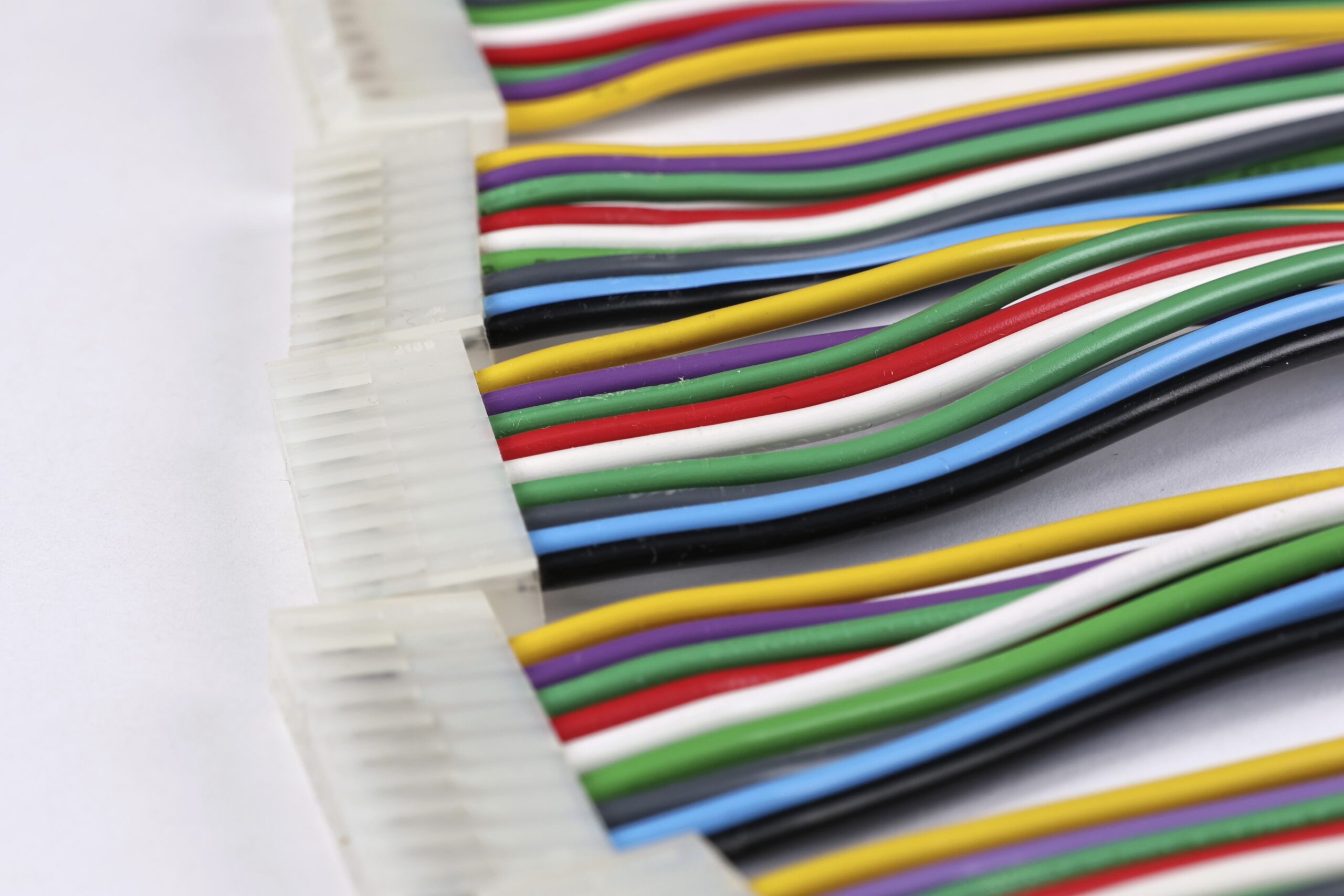
In many electronic products, the focus often falls on printed circuit boards or enclosures rather than the cable assembly. Yet when a project reaches late-stage testing or first customer installations, cable assemblies are a common source of redesign, field failure and cost overrun.
Prototype cable assemblies sit between design and production.
They are early, physical builds of the cables and harnesses your product will need, created to prove that the design works in real-world conditions before you commit to tooling, volume orders and full electronics manufacturing.
For original equipment manufacturers and design engineers, taking time to build and test prototype cable assemblies is a practical way to protect your schedule, control costs and reduce risk across the product realisation process.
Why prototyping matters in cable assembly
A typical product realisation process moves from concept, through design, into prototype, validation and finally production. Each step adds cost and effort, and changes become more expensive the further you progress.
Prototyping cable assemblies let you find and fix issues while changes are still relatively cheap and faster to rectify. For example, you can:
Because cable assemblies are flexible, three-dimensional and often hand-routed, they are difficult to validate fully on paper. Prototyping bridges that gap, giving you a realistic view of how the cable assembly behaves inside the wider electronics manufacturing and product realisation environment.
The advantages of prototype cable assemblies fall into eight practical areas that help you reduce risk and give you better information to support design decisions, sourcing and planning.
1. Validating form, fit and function
The first job of prototype cable assemblies is to prove that the design fits and functions in the real enclosure.
Key checks include:
By testing form, fit and function on a real sample, you reduce the risk of discovering a clash or access problem when the product is already in production or with customers.
2. Identifying design flaws early through iteration
Prototyping supports rapid build–test–revise loops. Each iteration of prototype cable assemblies is relatively low cost compared to a change made after production tooling or formal validation is complete.
Common design flaws caught at this stage include:
Findings from these iterations can feed back into the wider electronics design, so the cable, PCB and enclosure can evolve together. Treating the cable as an integral part of the design, rather than a late add-on, creates a more robust end product and reduces the chance of compromise solutions later.
A custom cable assembly approach also helps here; you can tailor conductor count, shielding, jacket materials and connector choices to the specific product, rather than forcing a generic solution into a tight or demanding space.
3. De-risking component sourcing and lead times
Beyond design, prototype cable assemblies help expose sourcing and lead-time risks before they affect your schedule.
Early prototyping can reveal:
Working with established cable assembly manufacturers supports this process. Because they purchase interconnect components continuously for a range of customers, they see supply issues forming early and can flag risks or suggest viable alternatives.
An experienced electronics manufacturer can also help you qualify second-source or drop-in alternative parts during prototyping. Doing this before production, rather than as a reaction to a shortage, reduces the likelihood of last-minute changes that disrupt testing or delay shipments.
4. Producing accurate cost and lead-time estimates
Prototype cable assemblies give you real data rather than estimates. A prototype sample shows how much labour the cable assembly needs, how much material it actually consumes and where scrap or rework occurs.
This practical information supports:
Custom cable assemblies benefit particularly from this stage. When a design is unique, you cannot rely on generic cost models or standard catalogue information. Prototype builds reveal the true effort required to produce and test the assembly, making your lead-time and cost forecasts more credible.
5. Accessing manufacturer and DFM expertise
The prototype build is often the first point at which an assembler’s experience becomes concrete, not theoretical. When you share design intent and allow an electronics manufacturer to build the first units, they can offer design for manufacture (DFM) suggestions based on real observations.
Typical DFM input may cover:
This expertise is especially valuable in cable and harness assembly, where much of the reliability and cost sits in the build process rather than the parts themselves. Production-friendly routing, strain relief and fixture design are difficult to optimise on paper alone; prototype cable assemblies give the assembler a chance to refine them.
Working with the right electronics manufacturer early in the project also builds familiarity with your standards and expectations, which can make later stages smoother.
6. Proving performance in the real operating environment
Prototype cable assemblies allow you to test performance in the same physical and environmental conditions your product will face in service.
Examples of environmental and mechanical validation include:
Electrical validation typically covers continuity, insulation resistance, dielectric withstand and, where necessary, signal integrity and EMI/EMC behaviour.
Prototyping the cable harness assembly in situ, rather than only on a test bench, shows how it behaves when constrained by the real enclosure and routing. This reduces the risk of field failures related to unexpected mechanical stresses or interference and supports long-term reliability.
Custom cable assemblies designed and proven against these real-world conditions are better suited to demanding applications like industrial, automotive and marine where maintenance or replacement would be difficult.
7. Building the quality and compliance evidence trail
Quality and compliance requirements are best agreed and documented at prototype stage, not after production has begun.
Prototype cable assemblies help you:
These artefacts form the basis of the production build pack and first-article inspection, and they support audits or customer reviews later. Because electronics manufacturing often operates under strict traceability expectations, having a clear link between prototype evidence and production records is valuable.
Using prototype cable assemblies to build this trail ensures that the cable assembly does not become a weak point in an otherwise well-documented product.
8. Creating a smoother route to production
Finally, prototype cable assemblies contribute directly to a smoother transition into production.
A well-executed prototype stage typically delivers:
For many OEMs, a custom cable assembly that has been prototyped thoroughly is easier to hand over to electronics manufacturing teams and quality functions. The work done at the prototype stage reduces the number of unknowns when volume builds begin, helping to shorten new product introduction ramp time and lower first-run defect rates.
Cable assembly services from EC Electronics
If you are looking for support with prototype cable assemblies, working with an experienced electronics manufacturer can simplify the process and improve outcomes.
EC Electronics offers:
For OEMs seeking UK cable assembly manufacturers who can support both prototyping and ongoing builds, partnering with an electronics manufacturer that understands the full product realisation process can help align design, quality and sourcing.
EC Electronics provides cable assembly services that sit within your wider product realisation process, supporting design engineers and procurement teams from the first prototype cable assemblies onwards.
If you have a project that would benefit from specialist input on custom cable assemblies, component choices or build methods, our team is ready to discuss your requirements and explore how dedicated cable assembly services can support your next product.