Skip to content

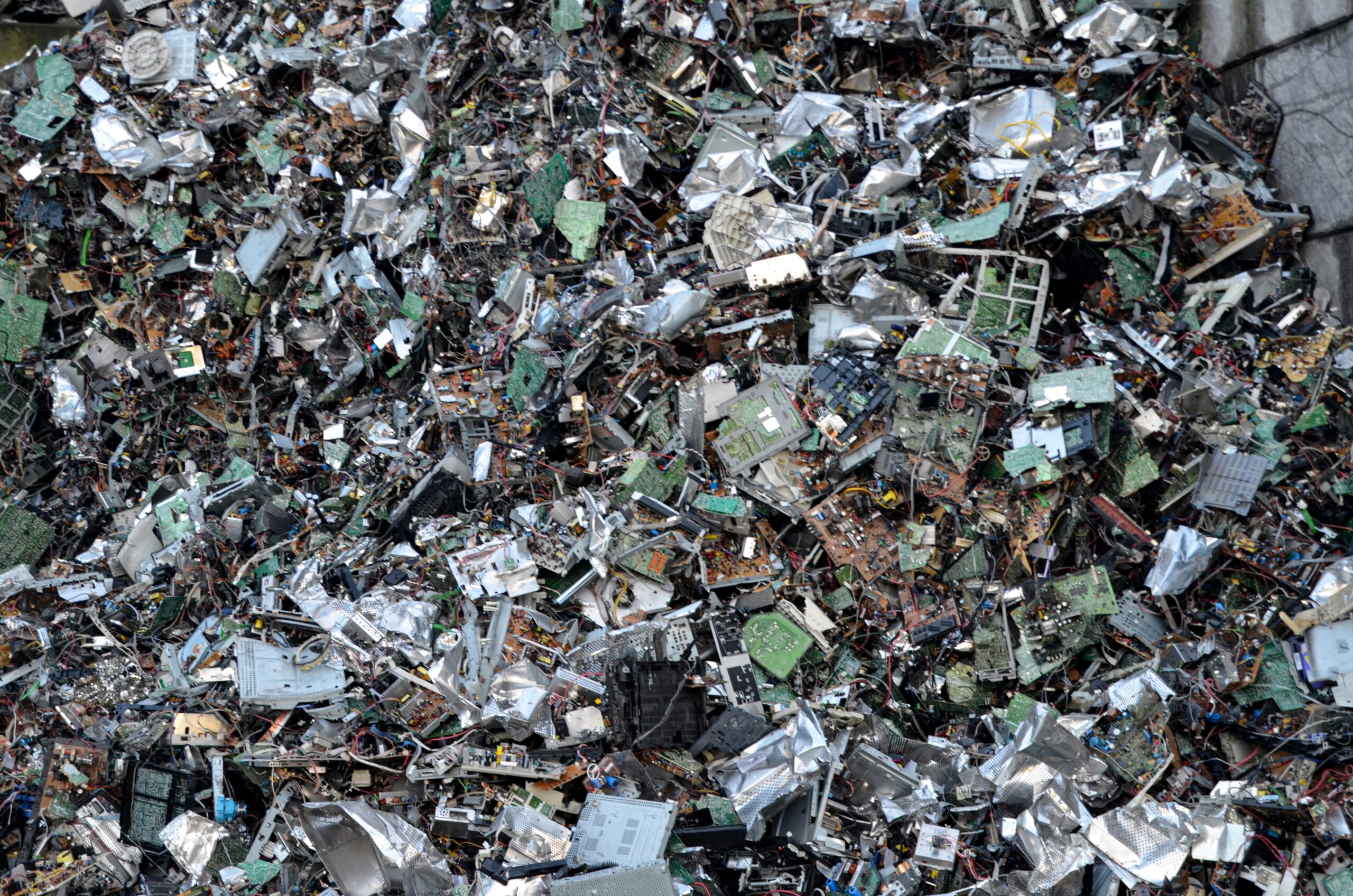
Every year, society generates a record 62 million tonnes of electronic waste. Furthermore, this volume is up 82% since 2010 and grows at 2.6 million tonnes annually. Therefore, OEMs sit closer to that problem than most.
Printed circuit board recycling represents one of the industry’s most pressing challenges. The choices made during design and printed circuit board production determine whether technicians can recycle a product responsibly at end of life. This includes material selection, component choice, and protective processes.
Otherwise, the board joins the 77.7% of global e-waste that never reaches formal collection. Consequently, procurement teams now routinely assess suppliers’ environmental credentials. Regulations covering material compliance, waste disposal and producer responsibility are expanding rapidly. Ultimately, sustainable electronic companies that demonstrate responsible practice win business over those that cannot.
Why printed circuit board recycling is so difficult
PCBs typically contain upward of 1,000 different substances. They combine organic matter, such as resin and brominated flame retardants, with heavy metals and high-grade precious metals. This includes gold, silver, palladium and copper. Consequently, that material complexity makes printed circuit board recycling highly challenging.
There is no single clean process available today. Every approach involves major trade-offs between recovery rate, cost and environmental risk. Traditional mechanical approaches include crushing, dismantling and then separating materials magnetically or electrostatically. These methods recover metallic components reasonably well. However, separating hazardous heavy metals from recoverable precious metals in the same pass is far harder.
Thermal and chemical methods yield purer outputs overall. Yet, they operate at high temperatures and pressures that risk releasing toxic fumes. In practice, recyclers consolidate boards into bulk amounts. When processing feels uneconomical, operators often cut corners.
As a result, formal systems collect and recycle only around 22.3% of global e-waste. The rest ends up in landfill or informal processing facilities. There, lead, mercury, cadmium and carcinogens leach into soil, waterways and the atmosphere. This causes an estimated US$78 billion per year in costs to human health and the environment.
The regulatory landscape: RoHS, REACH and WEEE
RoHS and REACH
Several overlapping European frameworks govern electronic waste handling. The RoHS (Restriction of Hazardous Substances) Directive came into force in 2003 and underwent revision in 2011. It explicitly restricts heavy metals including lead, mercury and cadmium. Furthermore, it limits flame retardants such as polybrominated biphenyls (PBB) and polybrominated diphenyl ethers (PBDE) in electrical equipment.
Thus, it shapes material selection directly during printed circuit board production. This happens because every component choice carries compliance implications. REACH (Registration, Evaluation, Authorisation and Restriction of Chemicals) goes even further. It strictly covers a broader range of chemical substances across the entire supply chain. RoHS targets specific substances in finished equipment. Conversely, REACH places obligations on manufacturers and suppliers to manage chemical risks throughout the product lifecycle.
WEEE
The WEEE (Waste Electrical and Electronic Equipment) Directive creates the framework for recovery, reuse and recycling. Any company that manufactures, distributes or sells electrical and electronic equipment must contribute to correct disposal and treatment. However, individual consumers carry no such legal requirement. Therefore, take-back schemes and collection infrastructure matter significantly.
These industrial standards set the minimum compliance floor. Nevertheless, a growing number of customers and procurement teams now assess environmental performance during supplier selection. Ultimately, buyers expect concrete evidence well beyond basic compliance.
Design is where printed circuit board recycling begins
Engineers determine the recyclability of a PCB before electronics manufacturing begins. Material choices, component selection and board design dictate how recoverable a board becomes at end of life. Consequently, sustainable electronics materials carry direct consequences for total recyclability.
RoHS-compliant components are noticeably easier to process at end of life. Additionally, designs that reduce complexity and use fewer composite materials are simpler to dismantle. Products built for longevity generate far less waste over their operational lifetime.
Circular economy and protective processes
The core logic of circular economy thinking is to design waste out from the beginning rather than managing it afterwards. Thus, the specific order of preference is share, reuse, repair, refurbish, and recycle. A board that engineers effectively repair never needs immediate recycling.
Sustainable electronic manufacturing treats end-of-life as a critical design parameter. This sits alongside operating temperature, form factor and signal integrity. Sustainable electronic companies that embed this into new product introduction processes gain a vital advantage. Consequently, they avoid the higher cost of retrofitting recyclability into a product later.
Furthermore, protective processes play a major role too. Potting and encapsulation, applied during printed circuit board assembly, protect boards from environmental degradation. This prevents issues that shorten product life, meaning fewer replacements and less material waste. Ultimately, this leads to much better resource efficiency overall. Choosing protection compounds that do not introduce additional hazardous materials forms a vital part of responsible printed circuit board manufacturing practice.
What responsible practice looks like on the factory floor
Regulatory compliance simply establishes a baseline. But sustainable electronics recycling demands highly consistent practice across facilities, supply chains and waste streams. Experts generally understand the practical levers well. However, the real differentiator is whether teams actually apply them consistently.
For OEMs assessing partners, how a manufacturer handles sustainable electronics recycling on the factory floor is incredibly telling. In fact, it provides as much clarity as any official certification.
On-site waste management
A few smart changes make a significant difference:
Supply chain accountability
An electronic manufacturer’s sustainability obligations do not stop at the factory gate. Responsibility runs securely through the entire supply chain. This means managers must extend the exact same internal scrutiny to every single supplier and subcontractor. Consequently, tighter regulation and customer audits push this up the agenda very fast. In practice, this means:
The economic case for acting now
The global e-scrap recycling market projects steady growth at a CAGR of 7.6% from 2021. Analysts expect it to reach US$7.3 billion by 2031. This growth stems largely from increasing e-waste volumes and rapidly tightening regulations.
Consequently, that impressive expansion reflects rising commercial demand for sustainable electronics recycling and printed circuit board recycling capability across the supply chain. Printed circuit board manufacturers investing in robust recycling infrastructure now position themselves ahead of a market where compliance will soon become mandatory.
Equally, component manufacturers can save substantially on material costs. They achieve this by effectively refurbishing equipment and reusing parts rather than simply replacing them.
For OEMs sourcing electronics manufacturing partners, end customers increasingly expect sustainable electronic products. Buyers who include environmental performance in their supplier scorecards direct business towards sustainable electronic companies. These partners must demonstrate, with solid evidence, that they manage their supply chain responsibly.
Therefore, companies unable to show this face a growing commercial disadvantage. Buyers now actively treat sustainability credentials as a basic qualifier. Ultimately, sustainable electronic products represent the baseline expectation, not just a simple differentiator.
How EC Electronics approaches sustainability
As a sustainable electronics manufacturer operating across facilities in the UK, Netherlands and Romania, EC Electronics leads by example. We have deeply embedded ESG principles across all our divisions. This covers vital environmental performance, supply chain accountability and corporate governance. On the environmental side:
Supply chain goals and standards
All components across EC’s production fully comply with RoHS and REACH. Moreover, we build meticulously for reparability and recyclability. We hold a clear target to demonstrate zero-waste best practices across all divisions by 2027.
Supply chain accountability also runs well beyond our own walls. A detailed ESG supplier questionnaire is currently in use. This helps to assess and engage suppliers on their sustainability performance.
Audits are underway, and we maintain a firm target for our top five suppliers per division. They must work toward shared sustainability targets by 2027. Furthermore, we target full ESG transparency and traceability across the entire supply chain for 2031.
All divisions are currently working toward ISO 14001 certification. This forms part of a long-term environmental management roadmap, sitting alongside our existing multi-site ISO 9001 quality management system.
For OEMs whose customers expect sustainable electronic products, this provides a documented and auditable foundation. From printed circuit board assembly through to cable assembly, overmoulding and conformal coating, we apply the exact same discipline. Across all our electronics manufacturing operations, we ensure strict material traceability and controlled processes. We maintain documented compliance with RoHS, REACH and WEEE requirements. Ultimately, this gives you absolute confidence that your supply chain can withstand intense scrutiny.
Sustainability credentials are now a core part of how customers choose their supply chain partners. Talk to our expert team about building a manufacturing partnership that stands up to that scrutiny at sales@ecelectronics.com.