Skip to content

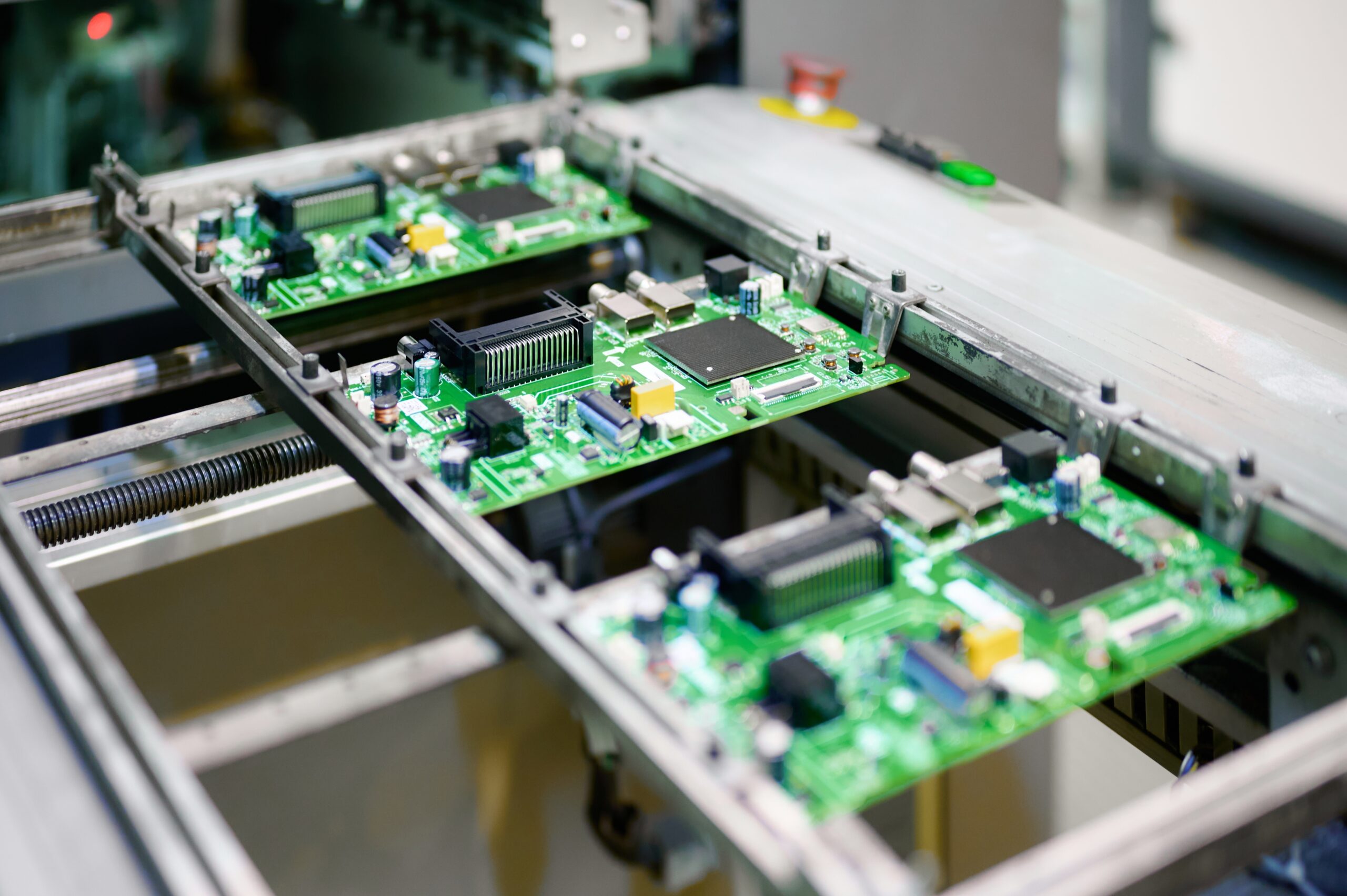
Every great electronic product starts with an idea. However, the distance between an idea and a scalable product is significant. During NPI, OEMs discover that good design and manufacturable design differ greatly.
Therefore, design for manufacturability (DFM) bridges this gap effectively. DFM means making smart decisions that your production process can support. For instance, engineers choose components with stable long-term supply. Additionally, board layouts must align seamlessly with automated assembly. Teams must also bake test strategies into the project from day one.
Consequently, this approach accelerates the product realisation journey while eliminating costly surprises.
When outsourcing manufacturing, your partner’s knowledge provides active design input. They should share insights during design, not just after quoting.
Therefore, address these five key considerations during design for manufacturability…
1. Fix production problems early with design for manufacturability
First, the new product introduction (NPI) phase provides the ideal moment to challenge build assumptions. At this stage, adjusting footprints or board layouts costs only engineering time.
However, making identical changes during pilot production causes board re-spins. Furthermore, late changes require re-qualifying test data and cause schedule slippage. This problem becomes especially painful after ordering component reels.
What a thorough NPI review should cover
Ultimately, top NPI workflows execute design for manufacturability reviews alongside main engineering tasks. During this phase, teams work in parallel. As a result, manufacturing limits inform design choices in real time.
2. Choose materials with supply chain longevity in mind
Selecting components during development dictates more than system performance. In fact, it determines whether your product remains manufacturable throughout its commercial lifespan.
The risks that DFM review should catch early
When outsourcing manufacturing, you gain visibility into component risks much earlier. Established supplier networks and approved vendor lists provide these warnings. Furthermore, this foresight protects your strict project schedule.
3. Build your test strategy directly into the design
Teams often treat testing as a late step in production. However, engineers should align testing with initial design. Ignoring test access creates expensive layout conflicts later.
Therefore, evaluate design for test (DFT) and design for manufacturability together. If a PCB layout lacks test points for in-circuit test (ICT), verification becomes complex. Furthermore, testing reliability drops significantly. Products combining printed circuit board assembly with custom cable assembly require integrated testing strategies.
The right questions to ask at the design stage
On one hand, over-testing restricts throughput. On the other hand, under-testing increases field returns. Balancing test coverage during NPI costs far less than correcting failures during volume production.
4. Think about the whole product, not just the board
DFM discussions often focus exclusively on the PCB. However, for most OEM products, the circuit board represents only one part of the assembly. Consequently, apply manufacturability discipline across every sub-system.
Custom cable assembly
Wire gauge, connector choices, crimp tooling, routing, and strain relief require careful review. Unreviewed cable designs increase manual handling and introduce quality risks. Fortunately, automated wire processing eliminates these risks when designs support automation.
Environmental protection
If your product requires overmoulding or coating, potting, or encapsulation, review material compatibility early. These processes interact directly with circuit layout and cabling. For example, conformal coating requires defined keep-out zones around connectors. Therefore, plan keep-out areas during board layout rather than using manual masking later.
Products incorporating PCBs, wiring, and enclosures benefit when manufacturers evaluate all sub-assemblies together. Integrated design and manufacturing capabilities eliminate hard-to-trace cost and quality issues. Thus, a unified review provides distinct advantages over managing fragmented suppliers.
5. Factor sustainability into your design decisions from the start
Engineers cannot leave sustainability for the end of a project. Today, procurement frameworks, investor expectations, and regulations push for environmental accountability. Consequently, initial design choices dictate environmental outcomes.
According to the UN’s Global E-Waste Monitor 2024, global e-waste reached 62 million tonnes in 2022. This represents an 82% increase since 2010. Furthermore, projections indicate e-waste will hit 82 million tonnes by 2030.
Regrettably, formal recycling systems processed under 25% of that waste.
In response, the EU’s Ecodesign for Sustainable Products Regulation (ESPR) enforces strict rules. It mandate repairability, recyclability, and data transparency for new products.
What to address at the design stage
Ask manufacturing partners the tough questions your clients ask you. For instance, manufacturers with ISO 14001 certification and active recycling programs embed sustainability into production.
Getting the most from outsourcing electronics manufacturing
DFM provides maximum value during open two-way technical discussions.
You bring product knowledge, market goals, and performance requirements. Meanwhile, your partner contributes process insights, material expertise, and production experience. A partner who passively builds what you send costs more long-term. Instead, they should actively optimize builds using design for manufacturability principles.
Therefore, when evaluating an electronic contract manufacturing partner, ask:
Ultimately, these answers distinguish true manufacturing partners from simple suppliers.
How EC Electronics can help — from design to product realisation
EC Electronics supports OEMs across the full product realisation journey. We assist from initial design through to volume production across five European facilities. Furthermore, we integrate DFM and DFT reviews into our NPI workflow. Our engineers apply manufacturing knowledge early to reduce downstream risks.
For OEMs outsourcing electronics manufacturing for the first time, this integrated approach delivers measurable cost and schedule benefits.
At EC Electronics, we deliver comprehensive manufacturing services, including:
If you are starting a new product introduction, reviewing an existing layout, or optimizing for design for manufacturability, speak to the EC Electronics team today.