 Skip to content

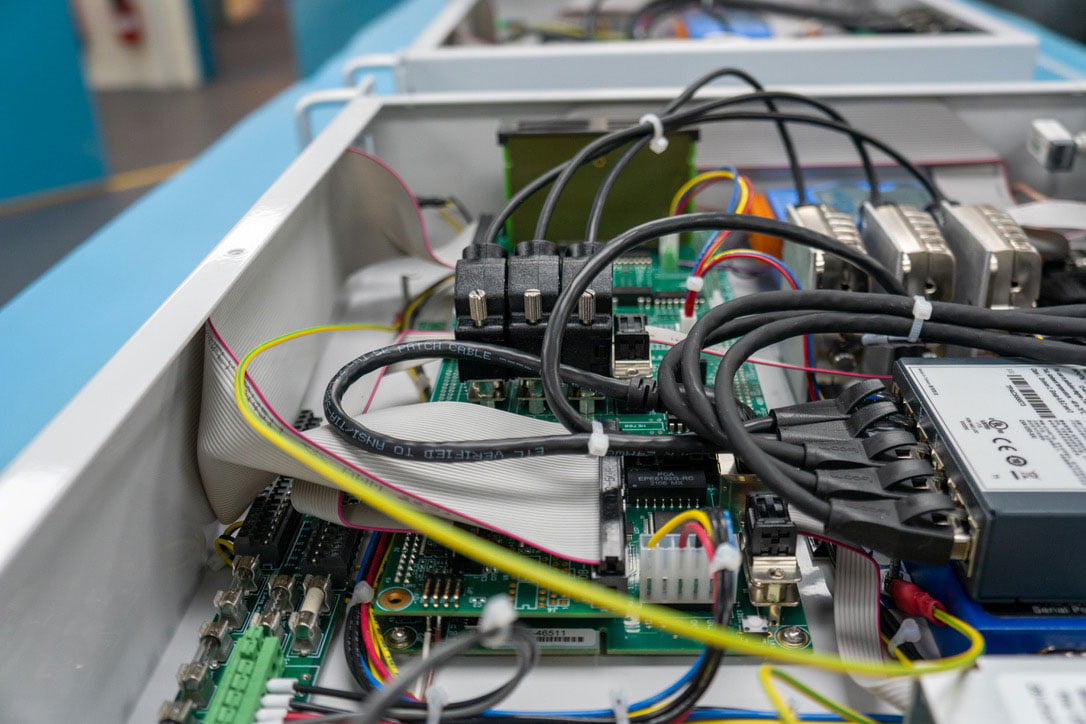
Manufacturing robust, reliable electronic products requires more than just printed circuit boards and mechanical housings. Cable assembly is a critical link that ensures power, signal integrity and connectivity between subsystems.
You may be an original equipment manufacturer (OEM) designing for automotive control units, marine navigation systems or industrial automation equipment. In each case, the interconnect harness is what holds the entire system together. Cable assemblies directly impact product performance, safety and longevity, so it’s essential to use quality cable assemblies.
In this guide, you’ll learn the key factors that determine cable assembly quality in different industries. You’ll also understand how to specify, test and procure cable assemblies that meet demanding requirements.
By the end of this guide, you’ll know why partnering with an experienced electronics manufacturer can streamline your production. Moreover, you’ll know what to look out for in an electronics manufacturing services provider.
Key considerations for quality cable assembly
You may be ordering standard off-the-shelf looms or specifying a fully custom cable assembly. Either way, several core factors affect quality, cost and time-to-market. Below, we break down the most important considerations and how they can vary by industry.
Material selection and conductor construction
To manufacture high-quality cable assemblies, you need to select the right materials and construction techniques.
Over-sizing conductors can increase cost while under-sizing can risk overheating, which could lead to costly recalls further down the line. So, it’s important to consider the conductor type and gauge. The right choice minimises voltage drop under load and prevents overheating and the risk of premature failure. Tin-plated copper conductors, for example, are common in electronics products that need to resist corrosion.
Insulation and jacketing materials are also crucial to cable assembly performance, particularly in harsh environments. A standard PVC jacket can suffice for low-voltage signal lines in controlled settings. However, applications that see elevated temperatures — such as power electronics — may require cross-linked polyethene (XLPE) or thermoplastic elastomer (TPE). Marine electronics often rely on fluoropolymers like PTFE or FEP to resist chemicals and saltwater. Similarly, industrial tendon or robotic arm systems frequently specify thermoplastic polyurethane (TPU) or heavy‐duty PVC jackets for abrasion resistance against moving parts.
Shielding choices also play a crucial role in preserving signal integrity in cable assemblies. Automotive infotainment cables typically employ foil shields for 100% coverage. In contrast, high-speed data lines in industrial networks might use braided copper shields with 80–95 % coverage. These protect against electromagnetic interference (EMI).
Connector selection and termination methods
Connector selection and termination techniques are equally important. For instance, marine systems often lean on IP68-rated circular connectors that prevent water ingress.
Termination methods — whether crimping or soldering — must be chosen based on volume, mechanical stress and the conductor type. A precise crimp can yield a safer connection than a hand-soldered joint. It should be executed by a calibrated press and inspected using pull-test fixtures. However, low-volume or highly specialised prototype cable assemblies may still use soldered terminations to accommodate unique pin layouts. Whenever connectors mate directly to a printed circuit board (PCB), wire-to-board pin headers require careful solder fillets and strain relief. This prevents joint fatigue during service.
Proper strain relief is non-negotiable in applications where cables flex, vibrate or endure repeated motion. This is where overmoulding and low-pressure overmoulding come into play. Overmoulding encapsulates the connector-cable junction in a durable thermoplastic or thermoset compound, creating a seamless transition that mitigates mechanical stress. In contrast, low-pressure overmoulding uses hot-melt polyamide injected at much lower pressures. As a result, delicate PCB-mounted terminations are not stressed by high injection forces. Both approaches seal against moisture and dust, helping assemblies achieve IP67 or IP68 ratings.
OEMs in automotive or marine sectors often specify overmoulding to ensure reliability under hood heat or submersion. Meanwhile, some industrial controls that require PCB-level cabling rely on low-pressure overmoulding. It protects against contaminants without risking solder joint damage.
Testing and compliance
Ensuring the cable assembly meets the demands of the application begins with a framework of certifications and standardised testing protocols. An ISO 9001–certified quality management system provides the procedural controls, process audits and continual improvement mechanisms needed. These maintain consistency across multiple production sites.
When this is combined with ISO 14001–based environmental management, manufacturers can guarantee two things. Both materials and processes adhere to performance requirements. They also comply with environmental regulations, such as RoHS (Restriction of Hazardous Substances) and REACH (Registration, Evaluation, Authorisation and Restriction of Chemicals). This dual-certification approach ensures every cable assembly produced complies with electrical, mechanical and ecological standards. That holds from the moment raw materials enter the facility until finished harnesses depart.
Many OEMs create electronics for safety-critical systems. It is therefore essential that all interconnects be designed, manufactured and tested according to recognised industry specifications. Manufacturers operating in these environments should work to IPC/WHMA-A-620 Class 3. This standard defines quality criteria for cable and wire harness assemblies used in high-reliability or mission-critical products. In addition, compliance with the ATEX Directive 2014/34/EU applies to cable assemblies destined for explosive or potentially combustible environments. Examples include oil and gas drilling platforms and chemical processing facilities. Compliance ensures these assemblies are constructed with intrinsically safe materials and processes.
Every cable assembly must also undergo continuity testing to confirm that no conductor breaks exist. This is followed by isolation checks and insulation resistance measurements to verify dielectric strength. Crimped contacts should also be subjected to pull-force tests and visual inspections in accordance with IPC/WHMA-A-620 standards. This combination of mechanical and electrical verification ensures that terminations will endure sustained vibration and shock loads. Typical settings include an engine bay, saltwater spray on a vessel or continuous operation in a factory environment.
When to opt for custom cable assembly
Off-the-shelf harnesses can’t always meet specific space constraints, environmental requirements, unique connector layouts or hybrid signal/power needs. In these cases, OEMs turn to custom cable assembly solutions.
Key drivers for customisation include:
Before specifying a custom cable assembly, work with your engineering and sourcing team to define the key parameters. These include pin-outs, conductor sizes, jacketing materials and connector types. Early collaboration with an electronic contract manufacturing partner can also surface manufacturability concerns well before production. Examples include overmoulded junctions or crimp tolerances for high-density connectors. This reduces the risk of recalls or rework.
The role of electronic contract manufacturing in cable assembly
As you expand product lines, you may face tighter time-to-market pressures. Outsourcing cable assembly to an experienced electronics manufacturing services partner can then deliver cost, quality and logistical advantages. Below, we outline the benefits of electronic contract manufacturing and key supplier capabilities to evaluate.
Comprehensive supply chain management
An electronic contract manufacturing provider typically manages vendor relationships for raw wire, connectors, housings and shrink tubing. Consolidating these sources under one roof reduces lead times and eliminates the need for you to juggle multiple purchase orders.
Expertise across connector and cable technologies
Leading electronics manufacturing services providers will maintain a broad portfolio of connector brands and termination equipment. Their portfolio also covers cable types (coaxial, twisted pair, multi-core, ribbon). This expertise lets you choose the optimal solution for signal integrity, mechanical durability and environmental sealing.
Scalable production capabilities
Volumes range from prototype cable assemblies in single–digit quantities to production runs of thousands to tens of thousands of units. An electronic contract manufacturing partner can scale resources to meet these demand fluctuations without capital investment. These resources include skilled labour, capital equipment and quality systems.
By using volume purchasing, process automation and established vendor contracts, contract electronics manufacturers can also lower your per-unit costs.
Consistent quality management
Certified electronics manufacturing services providers adhere to industry quality standards (including IPC/WHMA-A-620, ISO 9001, ISO 14001, ATEX, RoHS and REACH). They will also have robust process controls, such as crimp force monitoring, pull-test fixtures and 100 % visual inspection. These ensure each cable assembly meets specifications.
What to look for in a cable assembly supplier
When evaluating potential suppliers for cable assembly, look for specific capabilities that signal maturity in process and engineering support. Here are five key points to consider when choosing an electronics manufacturer for cable assemblies:
Why choose EC Electronics for cable assembly?
At EC Electronics, we provide a complete cable assembly service — from design, drawing and prototyping through to full production volume.
With 40 years of experience in electronics contract manufacturing, we have considerable knowledge of connectors, cables and terminating equipment. This covers a wide range of products from all the major suppliers. We continuously work to industry best practices, including the IPC/WHMA-A-620 Class 3 Standard. Our dedicated cable assembly facilities can fulfil production requirements for any cable assemblies and any volume.
Our most popular cable assembly services include:
Whether you are looking to be more competitive in your market or respond to short-term fluctuations in demand, we can help.
Contact EC Electronics today at +44 (0)1256 461894 or sales@ecelectronics.com to discuss your next cable assembly project and obtain a free quote.


