Skip to content

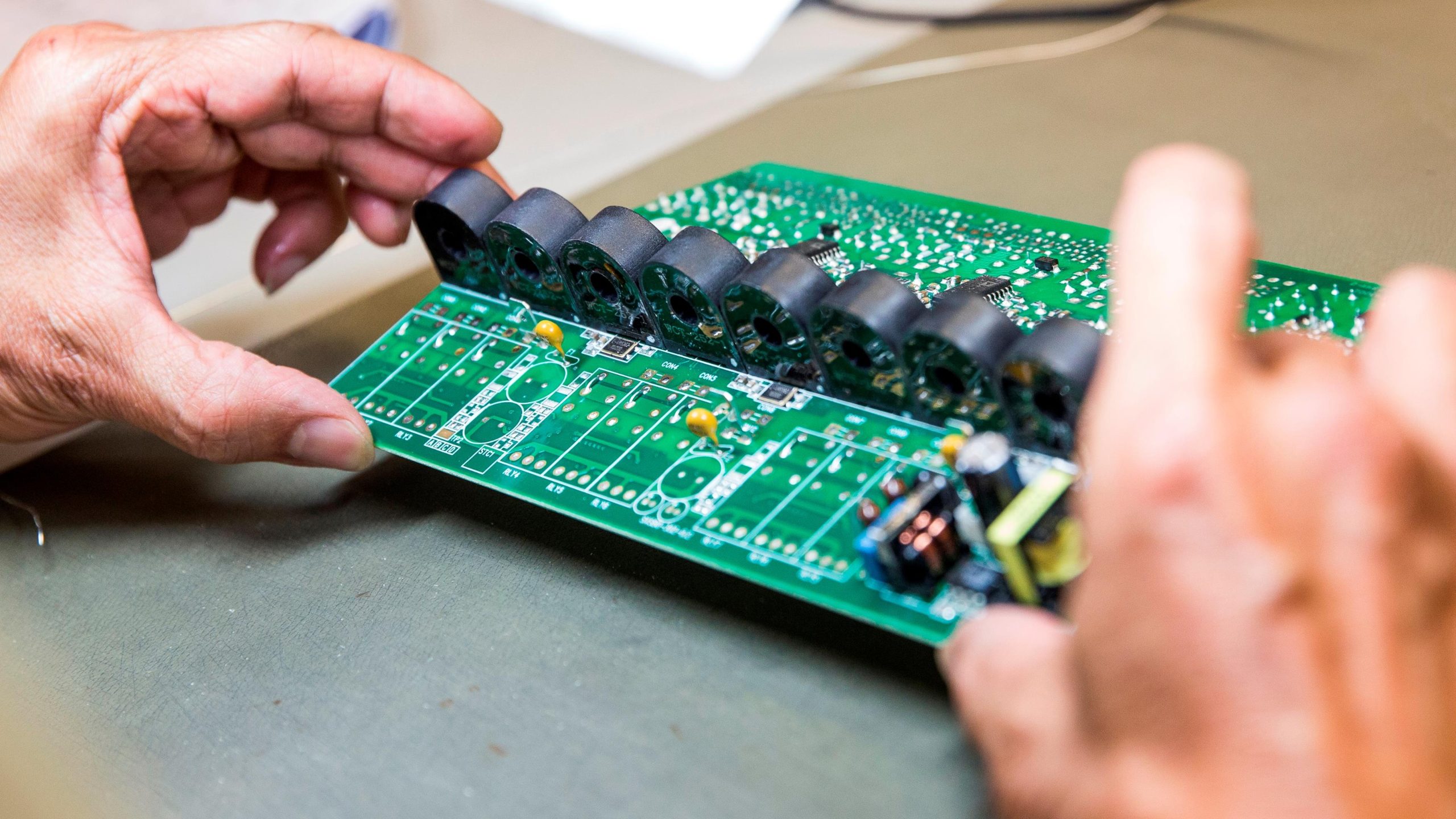
When you’re designing electronics for real-world conditions, you cannot rely on the enclosure alone, so conformal coating is vital. Furthermore, environmental stresses continuously test your circuit layout.
Moisture ingress, condensation, dust, salt spray, handling damage, vibration, and temperature swings can all degrade a printed circuit board (PCB) over time. This degradation happens even when the core circuit design is sound. Consequently, the result is often intermittent faults that technicians struggle to reproduce and diagnose.
Potting, encapsulation, and conformal coating provide the three most common ways to protect assemblies from these risks. Moreover, each method offers distinct strengths and trade-offs around protection level, weight, thickness, re-workability, and cost.
This guide explains when to use each approach, how to specify materials and thickness, and what to look for during application and inspection to ensure consistent production performance.
The three methods including conformal coating at a glance
In service, electronics rarely face one neat, isolated stress.
Humidity arrives with contamination. Similarly, vibration shows up alongside thermal cycling. Cleaning agents, oils, or salt can reach the same assembly that also sees shock loads in transit.
When those factors combine, the same weak points show up repeatedly. These weak spots include exposed solder joints, fine-pitch component leads, connector terminations, and interfaces where moisture and residues sit undisturbed.
Therefore, these protection methods help you manage that combined exposure by adding a barrier, mechanical support, or both:
Potting
Potting surrounds a board or sub-assembly with a cured compound, usually inside a housing that remains in the final product. Technicians often use it to reinforce mechanically stressed areas, such as cable entries, connectors, and heavy components. Furthermore, potting provides strong environmental protection. Operators can apply it to a whole assembly or selectively to high-risk zones.
Encapsulation
Encapsulation also surrounds the assembly with a cured compound, but workers remove the mould or tool used to form the protective shape afterward. Consequently, the tool does not become part of the final unit. You will often hear the term used broadly to describe compound-based protection applied to a complete module or a defined region of an assembly.
Conformal coating
A thin-film approach adds far less mass and build-up to the assembly. In many products, conformal coating provides effective environmental protection while preserving access for testing and rework. Furthermore, manufacturers frequently offer this step as part of an integrated electronics manufacturing route.
Applied consistently, these protection methods improve reliability and extend service life. As a result, they reduce returns, downtime, and waste. Conversely, inconsistent application introduces new failure modes. These errors include trapped contamination under a coating film, voids in compound fills, or material creeping into connectors and test points.
Therefore, you should view protection as an integral part of your PCB assembly and test strategy. When you plan protection from the start, you define keep-out areas, maintain test access, choose compatible materials, and avoid process surprises during volume scaling.
Conformal coating vs potting and encapsulation: choosing the right protection for the job
When you compare conformal coating to compound-based protection, you mainly balance three practical factors: access, build-up, and mechanical reinforcement.
A thin-film approach works best when you need environmental protection without adding weight or thickness. Additionally, it maintains access to connectors, test points, or rework. Conversely, potting or encapsulation works best when you require mechanical reinforcement and maximum protection at high-stress areas. These areas include cable entries, connectors, and heavy components, especially under severe vibration, shock, or harsh chemical exposure.
If you need both benefits, use a hybrid approach. First, apply conformal coating across the board for broad protection. Then, add selective compound only where sealing or reinforcement is required.
To decide quickly, start with your primary protection requirement:
From there, decide what you can accept in terms of added mass, build-up, heat retention, and future repairability. Consequently, you should make those choices alongside cleaning, masking, test access, and overall PCB assembly flow.
A closer look at potting, encapsulation and coating types
Protection chemistry matters because it affects flexibility, chemical resistance, temperature performance, re-workability, and production behaviour.
Conformal coating chemistries
The most widely used coating families are:
When documenting coating selection, list the critical exposures (condensation, salt, solvents, oils, dust) and lifecycle expectations (no service, depot repair, field repair). Consequently, this alignment keeps material decisions focused on real operational risks.
Potting and encapsulation chemistries
Compound-based protection uses similar chemical families. However, the mechanical behaviour and thermal impact tend to be more pronounced because you create a thicker mass around components. The same broad choices appear:
For compounds, process details are as important as the chemical formulation. Mixing ratio control, degassing, dispense programming, and cure profiles affect voiding, adhesion, and long-term reliability. Therefore, if you want volume repeatability, treat protection steps as controlled stages of your electronics manufacturing route rather than manual add-ons.
Is potting, encapsulation and conformal coating waterproof?
Potting and encapsulation can deliver very strong resistance to water ingress around the protected area. This high resistance occurs particularly when the design eliminates moisture paths and technicians apply compound without voids. Even then, overall waterproof performance depends on the whole system, including enclosure seals, vents, cable entries, and connector selection.
Conformal coating significantly reduces moisture-driven failures, especially from condensation and humidity. However, it does not automatically make the product suitable for sustained immersion or high-pressure wash-down. If immersion is a requirement, treat it as a system-level design problem. Consequently, consider targeted compound protection at ingress points alongside sealing and connector strategies.
As a quick rule of thumb: coatings help most with humidity and condensation on the board surface, while compounds help most where you need physical barriers and mechanical reinforcement at interfaces.
Is potting, encapsulation and conformal coating conductive?
These protection methods are intended to insulate, not conduct. Most coatings and compounds act as electrical insulators. Therefore, conductivity issues usually stem from process problems. These include ionic residues, conductive dust trapped under the protection layer, or incomplete coverage leaving exposed surfaces.
That is why cleaning, controlled handling, and verification steps matter whether you choose thin-film coating or compound-based methods. A good protection process starts before application with surface preparation and contamination control. Furthermore, it stays under control through curing, handling, and inspection.
Potting, encapsulation and coating equipment
Equipment choice directly affects repeatability, throughput, build-up control, voiding, and cure quality.
For coating, options range from manual brushing or spraying through dip coating to automated selective coating systems. Automated systems apply material only where needed, thereby reducing masking and process variation. Operators typically select these routes based on board complexity, required thickness control, and volume. Furthermore, suppliers offer them as part of professional PCB conformal coating services.
For potting and encapsulation, the key equipment provides controlled mixing and dispensing. Meter-mix-dispense systems maintain accurate ratios and consistent flow, while degassing and vacuum options reduce bubbles and voids. In addition, accurate dispense programming and controlled curing support consistent fill levels, predictable mechanical support, and stable insulation performance.
If you are scaling production, keeping coating and compound processes inside one controlled electronics manufacturing route improves consistency. This occurs because handling, cleanliness, and process settings remain stable. When selecting an electronics manufacturer, ask how they control:
This control applies whether you outsource PCB conformal coating services or specify potting and encapsulation as part of the build.
Potting, encapsulation and coating inspection
Inspection and standards work best when they translate into clear, measurable acceptance criteria for all three protection methods. Your goal is total repeatability: making the same decision the same way across builds. Furthermore, you need evidence you can trace back to materials, process settings, and inspection results.
What to inspect for conformal coating
Coating inspection focuses on coverage, cleanliness, and cure, because thin films can hide defects that surface later in the field. Key checks typically include:
A robust approach combines pre-coat cleanliness control, coverage checks under suitable lighting (often ultraviolet when using tracers), cure verification, and sampling to confirm thickness where required.
What to inspect for potting and encapsulation
With potting and encapsulation, inspection shifts towards fill quality, void control, and post-cure effects. This focus is necessary because defects become buried once the compound sets. Acceptance criteria commonly cover:
Where access is limited after cure, many teams use in-process controls (mix ratio, degassing, dispense parameters, and cure profile) as quality evidence alongside end inspection.
If you are selecting an electronics manufacturer, ask how they turn these requirements into practical controls. Consequently, request details on documented acceptance criteria, inspection methods, material traceability, process settings, non-conformance handling, and batch records.
How EC Electronics can help
Whichever method you choose, plan protection into your PCB assembly route early and insist on controlled application, documented inspection, and full traceability. That discipline wins production reliability. It is also where PCB conformal coating services and compound application deliver maximum value: consistent outcomes, not just a finished appearance.
If you want potting, encapsulation and PCB conformal coating services delivered within one controlled build, EC Electronics combines automated capability with strict production discipline.
We run automated conformal coating on a Mycronic MY50 line in our Romania facility. Integrated with ATEX-compliant fume extraction, this process gives you a repeatable route to precise thickness control for compact designs.
For compound-based protection, we support back-potting and full encapsulation. Working with various compounds (including resins, silicones, and epoxies), we help you balance performance, cost-efficiency, and product longevity.
These protection steps sit naturally alongside PCB assembly and test requirements. As a result, they improve corrosion and moisture resistance while strengthening electrical insulation where reliability margins are tight.
For hazardous-area applications, EC Electronics operates manufacturing controls aligned to EN ISO/IEC 80079-34:2018 in line with IECEx and the ATEX Directive 2014/34/EU, alongside ISO 9001, ISO 14001, and IPC workmanship standards. Therefore, this provides the traceability and documented process control needed for consistent production protection.
Need to decide between coating, potting or encapsulation? Speak to the team today to discuss your requirements, and we’ll help you select the method, materials and process controls that deliver consistent results in production.